General Information
The Cherry Barb is a small tropical freshwater fish native to Sri Lanka. It belongs to the family Cyprinidae and is popular in aquariums because of its bright red coloration and peaceful personality.
Cherry Barbs are active schooling fish that spend much of their time swimming around the middle and lower areas of the aquarium. They are generally hardy and can adapt to a variety of aquarium conditions when properly maintained.
They are best kept in groups of at least five or six, with a higher proportion of females helping reduce unwanted attention toward individual fish.
Size & Appearance
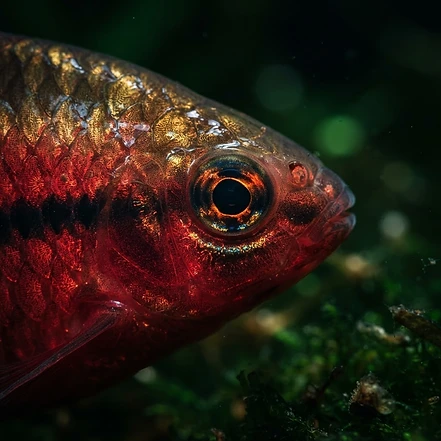
Cherry Barbs typically grow to around 5 cm (2 inches) in length. Their bodies are elongated and slightly compressed, with a dark horizontal stripe running along each side.
Male: Smaller, slimmer, and more colorful. Their bodies become a deep cherry red, especially during breeding periods.
Female: Usually larger and rounder, with a lighter fawn or brownish coloration and subtle pinkish stripes.
Both sexes have relatively small fins and a streamlined body suited for swimming through vegetation.
Albino Cherry Barb
Albino Cherry Barbs are a selectively bred color variety of the Cherry Barb. Unlike the typical dark red coloration, they have a much lighter appearance due to reduced pigmentation.
Their bodies are generally pale pink, cream, or yellowish-white, with lighter fins and noticeably red or pink eyes. Their coloration can vary between individual fish.
Albino Cherry Barbs share the same general behavior, adult size, and care requirements as standard Cherry Barbs. They are peaceful, social fish that should be kept in groups.
They can generally be kept with regular Cherry Barbs in the same aquarium. Their different coloration makes them a distinctive addition to a mixed group.
Natural Habitat
Cherry Barbs naturally inhabit freshwater streams and small waterways in Sri Lanka. These environments often contain shallow, slow-moving water, shaded areas, and dense vegetation.
Their natural habitat typically has silty or sandy bottoms, fallen leaves, submerged roots, and plenty of plant cover. The water is often relatively soft and slightly acidic.
In an aquarium, these conditions can be recreated using live plants, driftwood, shaded areas, and a soft substrate.
Temperament
Cherry Barbs are generally peaceful community fish. They rarely bother other species and can be kept with similarly sized fish that have compatible water requirements.
Males may occasionally chase one another while establishing a hierarchy or competing for females. This behavior is usually harmless when enough space and hiding places are provided.
They are social fish and should not normally be kept alone. A group allows them to display more natural schooling and social behaviors.
Diet
Cherry Barbs are omnivores and naturally feed on small invertebrates, algae, and organic matter. In aquariums, they readily accept a variety of foods.
A quality tropical fish flake or small pellet can serve as their primary food. Their diet should also include occasional protein-rich foods such as brine shrimp, daphnia, and bloodworms.
Blanched vegetables, including spinach and zucchini, can provide additional plant matter. Offering a varied diet helps support their overall health and coloration.
Aquarium Care
A planted aquarium with open swimming space is ideal for Cherry Barbs. They appreciate dense vegetation along the sides and back of the tank, while leaving the center open.
A gentle to moderate water current is preferable. Regular water changes, proper filtration, and stable water parameters help maintain good health.
Suitable tankmates include other peaceful community fish, such as small rasboras, tetras, Corydoras catfish, and other similarly sized species.
Breeding
Cherry Barbs are egg-scattering fish and can reproduce relatively easily under suitable conditions. They do not form lasting breeding pairs or provide parental care.
During breeding, males become more intensely red and may display to females. Females scatter their eggs among fine-leaved plants, moss, or other vegetation.
A female may produce several hundred eggs during a spawning event. However, the adults may eat their eggs, so dense plant cover or a separate breeding aquarium can improve survival.
Eggs typically hatch within one or two days, depending on temperature. The fry become free-swimming several days later and can initially be fed infusoria or other suitable microscopic foods before progressing to baby brine shrimp.
Read the complete breeding guide